 Dec 26, 2025
Table of Contents
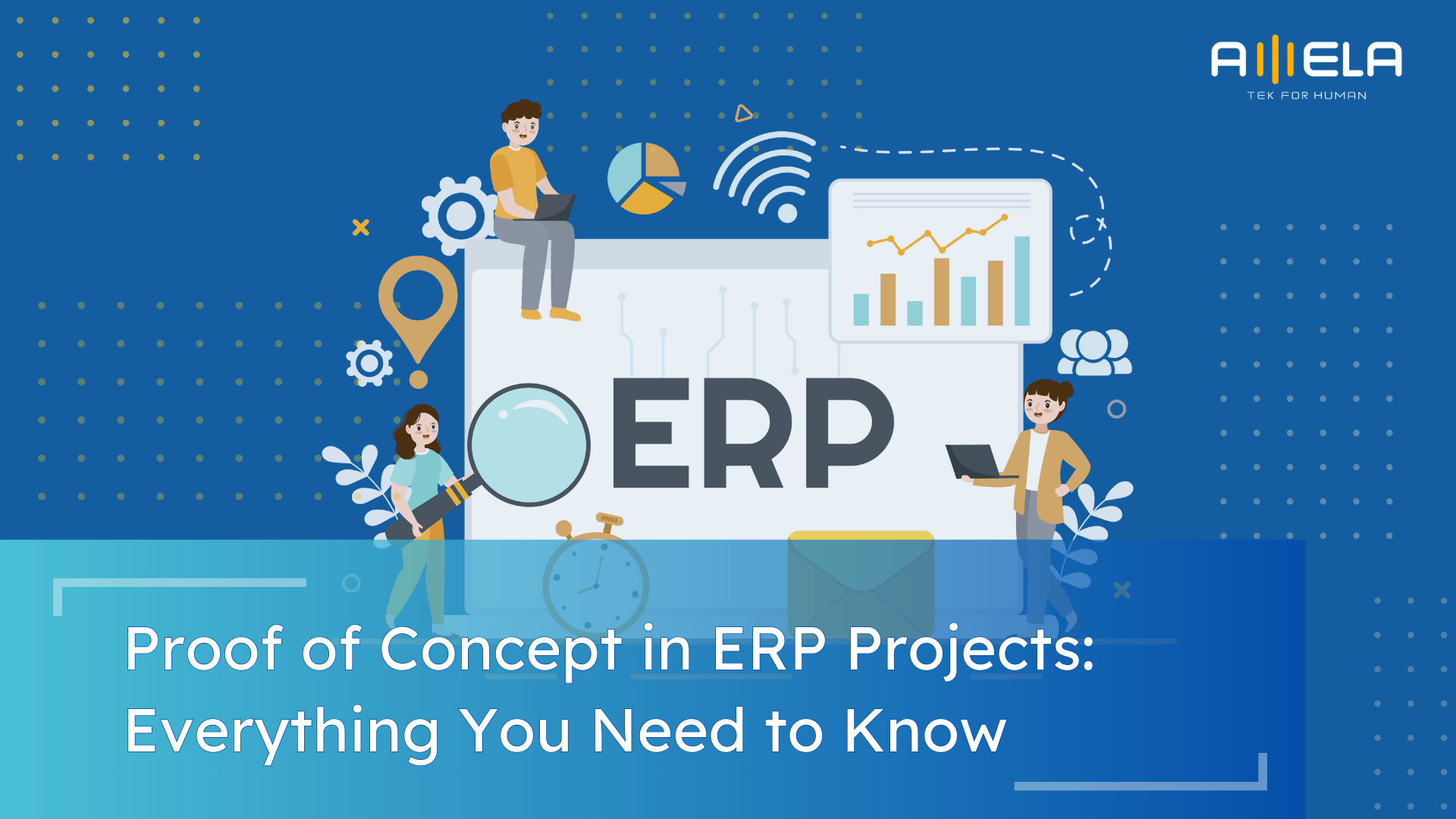
A proof of concept in ERP projects helps teams validate feasibility, reduce risk, and make informed decisions before committing to full implementation.
Given the complexity and business impact of ERP systems, early validation is critical. This guide explains what a proof of concept in ERP projects is, why it matters, how to create one effectively, and common pitfalls to avoid—based on real project experience.
What Is Proof of Concept in Project Management?
A Proof of Concept (PoC) in project management is a small, focused validation exercise used to confirm that a proposed idea, solution, or approach is technically and operationally feasible before full-scale execution.
From our experience, a PoC is not about building a mini product. It’s about answering the riskiest questions early, with the least amount of time and cost. In other words, PoC exists to reduce uncertainty before commitment.
Why Proof of Concept (PoC) Matters in ERP Project Management
A Proof of Concept matters because it reduces risk before teams commit real budgets, timelines, and people. From our experience managing complex software and ERP initiatives, PoC is one of the most effective tools project managers have to replace assumptions with evidence—early and cheaply.
Below are the key benefits of PoC in project management, based on how it plays out in real projects.
Validates feasibility before major commitment
PoC helps confirm whether a proposed solution can actually work in your environment. This includes technical feasibility, integration capability, performance limits, and operational fit.
Without PoC, teams often discover blockers only after development is underway—when changes are costly and politically difficult. PoC surfaces these issues early, when decisions are still flexible. That’s a big win.
Reduces delivery risk and uncertainty
Every project starts with unknowns. PoC is designed to attack the riskiest assumptions first, rather than spreading risk evenly across the timeline.
From a project management standpoint, this dramatically improves predictability. When feasibility is validated early, estimates become more realistic, plans become more stable, and surprises are fewer. Less chaos, fewer fire drills.
Improves decision-making with real data
PoC turns opinions into evidence. Instead of debating whether an approach might work, stakeholders can see results and make informed go/no-go decisions.
We’ve found this especially useful in cross-functional teams, where business and technical perspectives may differ. PoC creates a shared reference point that cuts through speculation and aligns decision-makers faster.
Protects budget and resources
By testing ideas on a small scale, PoC helps prevent large investments in solutions that don’t deliver expected value. It’s far cheaper to fail—or pivot—during a PoC than during full implementation.
From experience, PoC often pays for itself by eliminating one wrong architectural choice or integration assumption. That alone can save weeks or months of wasted effort.
Builds stakeholder confidence and alignment
Seeing a concept work, even in a limited form, builds confidence across stakeholders. Business leaders gain trust that the solution is viable, while delivery teams gain clarity on scope and constraints.
This shared confidence reduces friction later. When everyone has seen the PoC results, discussions about scope, timeline, and budget become far more grounded. No hand-waving, no guessing.
Enables smarter scope and roadmap planning
PoC outcomes often influence what gets built first—and what doesn’t get built at all. By understanding feasibility and effort early, teams can prioritize high-impact features and defer risky or low-value items.
From a project management view, this leads to leaner scope, clearer milestones, and better sequencing. Projects move forward with intent instead of hope.
A practical takeaway from experience
PoC matters because it buys clarity at a low cost. In projects with uncertainty—new technology, complex integrations, or high operational impact—skipping PoC is usually a false economy.
Good project managers don’t use PoC to slow things down. They use it to make sure the project is worth speeding up.
If your ERP PoC validates the need for a tailored solution, understanding what custom software development involves is the next logical step.
How to Write a Proof of Concept in ERP Projects
Writing a PoC for an ERP project is about validating the riskiest parts of the system before committing to full implementation.
From our experience, a good ERP PoC is not long or complex—it is focused, time-boxed, and decision-oriented. Its job is to answer hard questions early, not to impress anyone with features.
Here’s how we typically structure and run a PoC in ERP projects.
Start with the business problem, not the ERP modules
ERP PoCs fail when they start with tools instead of problems. Before writing anything, clearly define what business risk you are trying to validate.
This could be data migration feasibility, process fit, system performance, or integration with legacy systems. If the PoC cannot clearly answer “what decision will this support?”, it’s already off track.
In ERP, less is more. One validated risk is better than ten half-tested assumptions.
Define clear PoC objectives and success criteria
A PoC must have explicit goals. These goals should be measurable and tied directly to decision-making.
For example, success might mean confirming that a critical workflow can be executed end-to-end, that data accuracy meets a defined threshold, or that system response time stays within acceptable limits. From experience, vague objectives lead to vague conclusions—and vague conclusions don’t help anyone decide.
Select a narrow, high-impact scope
An ERP PoC should cover only the most critical processes, not the entire system. Common PoC focus areas include finance posting, inventory synchronization, order-to-cash flow, or integration with third-party systems.
Trying to cover too much turns the PoC into a mini-implementation, which defeats the purpose. The goal is to reduce uncertainty, not build production-ready software.
Design realistic test scenarios and data
PoC results are only as good as the scenarios being tested. Use realistic workflows and representative data, even if the volume is limited.
We’ve seen PoCs pass with clean demo data, only to fail later when exposed to real-world complexity. ERP systems are deeply tied to business operations, so realism matters—a lot.
Involve the right roles early
ERP PoCs work best when business users, system owners, and technical leads are all involved. Business users validate process fit, while technical teams assess feasibility and constraints.
From experience, excluding business stakeholders from PoC testing often leads to false confidence. ERP success is as much about operations as it is about technology.
Time-box execution and document findings clearly
A PoC should be short and focused—typically weeks, not months. Once testing is complete, document findings clearly: what worked, what didn’t, risks identified, and recommended next steps.
The most important output is not the PoC itself, but the decision it enables—proceed, adjust scope, change approach, or stop.
Writing a PoC in an ERP project is about discipline, not detail. The best PoCs ask sharp questions, test them honestly, and provide clarity before large investments are made.
If your PoC does not change or confirm a major decision, it probably tested the wrong thing.
If you need support in this phase, AMELA provides ERP development services that build on PoC insights and validated decisions.
ERP PoC Deliverables
ERP PoC deliverables are concrete outputs that support a clear go / revise / stop decision. From our experience, a PoC is only successful if stakeholders can point to tangible evidence—not opinions—at the end.
Here’s what a solid ERP PoC should produce:
- Validated business workflows: Clear confirmation that one or two critical end-to-end processes (e.g., order-to-cash, procure-to-pay) can run as expected within the ERP context.
- Technical feasibility summary: Findings on integrations, data flow, performance constraints, and system limitations—what works, what doesn’t, and why.
- Data migration sample results: Evidence that real or representative data can be mapped, transformed, and processed accurately, even at a small scale.
- Gap and risk analysis: Identified gaps between standard ERP capabilities and business needs, along with operational or technical risks uncovered during testing.
- Implementation recommendations: A clear recommendation on next steps: proceed as planned, adjust scope or architecture, or rethink the approach entirely.
The key point: if your PoC ends without influencing a major decision, it probably didn’t go deep enough.
Common ERP PoC Mistakes
Most ERP PoC failures come from poor focus rather than technical execution. Based on real-world ERP projects, these are the most common mistakes teams make:
- Treating the PoC like a sales demo: Validating standard ERP features instead of testing real business workflows creates false confidence and hides operational gaps.
- Using unrealistic or overly clean data: PoCs that avoid real-world data complexity often pass easily but fail later during full implementation.
- Trying to test too much at once: Expanding scope across too many modules turns the PoC into a shallow exercise instead of validating the riskiest assumptions first.
- Lack of business user involvement: When operations teams are not involved, process misfits surface late, when changes are far more costly.
- No clear success or failure criteria: Without defined pass/fail conditions, PoC results become subjective and decisions stall.
- Rushing to implementation after partial validation: Moving forward without fully reviewing PoC findings often carries unresolved risks into the main project.
A strong ERP PoC focuses on what can break, not what looks good. Avoiding these mistakes turns PoC into a reliable decision tool rather than a checkbox step.
>>> Related: Custom Software Development Guide
FAQs About ERP Proof of Concept (PoC)
How long should an ERP PoC take?
Most ERP PoCs take 2–6 weeks, depending on complexity. Simple integration or workflow validation can be done in a few weeks, while core process testing across systems usually takes longer. From experience, if a PoC drags on beyond this without clear outcomes, it’s often a focus issue.
Who should approve ERP PoC results?
ERP PoC results should be approved jointly by business owners and IT/system owners. Business leaders validate process fit and operational impact, while IT confirms technical feasibility and risks. Shared approval ensures decisions are grounded in both reality and strategy.
When should you skip PoC in ERP projects?
PoC can sometimes be skipped for low-risk changes, such as minor module extensions, repeat rollouts with the same ERP and scope, or regulatory updates with well-defined requirements. However, for new systems, integrations, or process changes, skipping PoC usually increases risk rather than saving time.
Conclusion
A proof of concept in ERP projects is not about building more—it’s about learning early and deciding wisely. When done right, it clarifies feasibility, exposes risks, and strengthens alignment between business and technology teams.
By using a focused, decision-driven proof of concept in ERP projects, organizations can move forward with confidence, avoid costly surprises, and set a stronger foundation for successful ERP implementation.